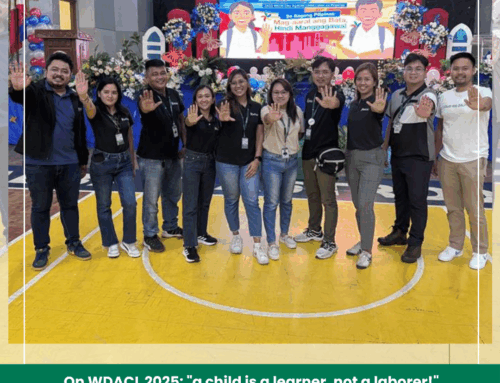

Educo Philippines took a significant step in deepening its commitment to child protection and community empowerment by conducting a three-day training on Behavioral Change Communication (BCC). The initiative brought together Educo Philippines’ workforce and partner school representatives to strengthen their capabilities in designing and delivering communication strategies that foster safe, nurturing, and rights-respecting environments for children.
Held from June 3 to 5, the BCC workshop equipped participants with essential tools to address complex child protection challenges using strategic communication. Drawing from global best practices and real-world experience, the training emphasized the power of tailored messaging, audience-centered planning, and digital platforms to shift behaviors and influence social norms.
Elevating communication for sustainable impact
The workshop aimed to provide more than just theoretical understanding. It was designed to transform how Educo teams and partners communicate within their child protection initiatives. At the core of the training was a comprehensive introduction to the foundational principles of Behavioral Change Communication and its relevance to the day-to-day realities of community-based child protection work.
Educo’s staff, teachers and students from partner schools, explored how to systematically analyze problems and identify root causes of child protection concerns. This process led to deeper discussions on the importance of audience analysis by knowing who the message is for, what motivates or hinders their behavior, and how to speak to them in ways that resonate. From there, the training moved into crafting compelling messages, aligning these with the right communication channels, and ensuring cultural relevance.
Digital engagement was another crucial component of the workshop. Participants learned how to harness social media, mobile tools, and other platforms to amplify their communication efforts. They gained practical experience in creating content for various digital touchpoints, ensuring that even the most remote communities could be reached effectively.
To sustain the momentum beyond the training, interactive sessions equipped participants with tools to measure the success of their BCC strategies, focusing not just on reach, but on actual shifts in knowledge, attitudes, and behaviors.
Grounded in collaboration, geared toward action
True to Educo Philippines’ mission for child participation, the training fostered peer learning and sharing of ideas. Participants shared lived experiences from schools, communities, and ongoing child-focused projects, reinforcing the value of localized insight in shaping communication efforts.
A key highlight was the development of practical action plans, with each group outlining how they would integrate BCC approaches into their work. These plans reflected a balance of ambition and practicality, embedding behavioral insights into interventions that are community-driven, measurable, and focused on long-term change. Participants also applied their learning by producing creative pubmats and mock social media content, showcasing how words can influence protective behaviors in homes, schools, and public spaces.
Voices from the participants
The training’s impact resonated strongly with participants. Sarah, a teacher, expressed deep appreciation for Educo Philippines’ mission and vision, commending its alignment with values she upholds in her own professional practice. She shared that she learned significantly from the training and looked forward to applying her new insights in the school where she teaches.
Sunshine, a student, reflected on a quote that stood out to her during the opening remarks delivered by Educo Philippines’ Country Director, Marlon Villanueva, “rules without good relationships lead to rebellion.” For her, this captured the essence of why communication must go beyond instruction. It must build trust, especially with children and youth. She emphasized that relationships are foundational to behavior change, and effective communication is the bridge that nurtures these bonds.
Alma, another teacher, offered a strategic reflection on the training’s purpose. She noted that recognizing existing problems was the first step—and that effective communication is essential for identifying root causes and responding meaningfully. She stressed that children respond better when communication is thoughtfully tailored, and when it reflects their realities and language.
Why this matters?
This investment in BCC is more than a training, it is a strategic lever for Educo Philippines to scale behavior-driven approaches in its child protection work. Communication is increasingly recognized as a powerful tool to address complex issues such as violence against children, social stigma, and lack of child participation. Through this training, Educo is positioning itself at the forefront of behaviorally informed programming in the Philippines.
By equipping staff and partners with skills to not only inform but also influence and inspire, Educo is creating pathways to behavioral and social change that will ultimately lead to safer, more inclusive environments for children.
Looking ahead
This training isn’t an end. It’s more of a beginning. Educo Philippines is now poised to pilot BCC-informed initiatives across its project areas. The action plans and content prototypes developed during the workshop will guide future efforts, ensuring they are rooted in both community realities and evidence-based communication strategies.
This marks a critical milestone in Educo’s journey to elevate the role of communication in child protection. With sharpened tools and renewed commitment, we move forward, more equipped than ever to champion the rights, voices, and well-being of every Filipino child.